An enigmatic journey through the making of a sovereign dream.
The paper lay quietly on the desk.
Staring outside, Bombay carried on as it always did. Trams rattled against the pavement; the harbour moved with the rhythm of a city at war, and somewhere beyond the windows, the machinery of the British Empire continued its relentless hum.
But at the desk sat a young physicist who would soon change the trajectory of India’s scientific future: Homi Bhabha. He had returned to India only a few years earlier. Before him was a letter addressed to the Sir Dorabji Tata Trust.
But this letter, written by Homi Jehangir Bhabha, was not about a bomb.
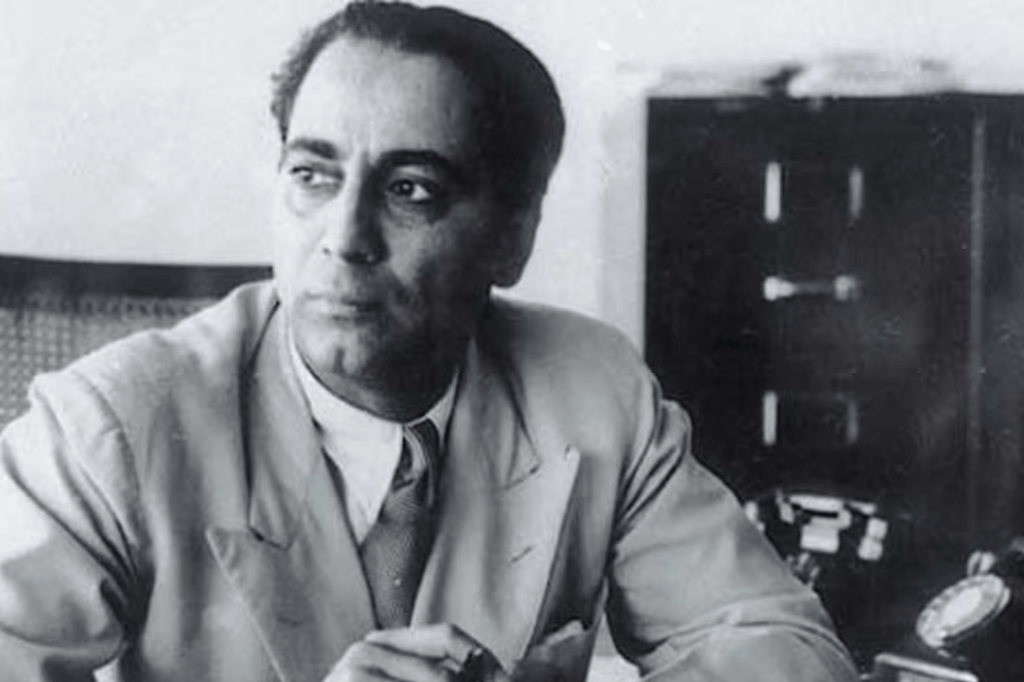
It was about a laboratory.
Drafted in 1944, the proposal called for the creation of an institution where India could reach the heights of scientific research. This was an audaciously ambitious proposal for a country still under colonial rule, still awaiting its independence.
Bhabha wasn’t merely advocating for a laboratory. He had a much larger vision. A generation of Indian scientists capable of conducting world-class research, right on this soil.
And while the atom had not yet become the centre of India’s national story, the foundations were already being laid. Neither Bhabha nor the India around him could have anticipated just how far this first idea would travel. This vision soon found an unlikely partner in a country preparing to become independent. With the support of the Tata Trust, the Tata Institute of Fundamental Research was established in 1945. Not more than 3 years later, an independent India established its own Atomic Energy Commission, with Homi Bhabha at its centre.
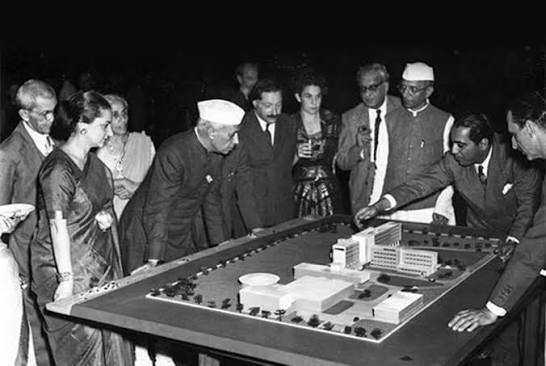
What began as a pursuit of fundamental science was now going to become something much bigger.
India’s then prime minister, Pandit Jawaharlal Nehru, saw the potential in atomic energy and viewed it as an instrument for India’s development. Homi Bhabha saw the possibility of building a scientific framework, one that was built entirely in India. Looking back decades later, this step may be easy to understate. But for a country that was still discovering its identity, the creation of an indigenous atomic programme was nothing short of remarkable.
Laboratories rose at Trombay (the eastern harbour suburb of modern-day Mumbai), where young scientists were trained, and in 1956, APSARA became the first research reactor to achieve criticality in Asia, aside from the Soviet Union.
India was learning to master the atom.
Mastering the atom, however, meant confronting an uncomfortable question India couldn’t avoid for long.
What was this technology ultimately for?
Initially, the nation had envisioned atomic energy primarily as a tool for development – for electricity, industry, and scientific progress. But beyond the borders, the atom was increasingly becoming a means of war, conflict, and destruction.
In 1962, India fought a devastating war with China. Two years later, China detonated its first nuclear weapon. The world India inhabited suddenly became a much more perilous place.
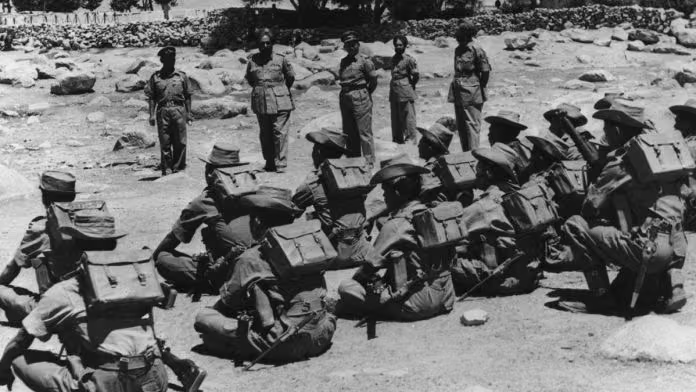
Homi Bhabha understood what this harsh lesson meant. India had built the foundations of a nuclear programme, but the strategic world around it was changing faster than ever.
However, in January 1966, Air India Flight 101 crashed into Mont Blanc, taking the visionary Homi Bhabha with it.
The man who had first imagined India’s nuclear future was gone, but his thinking, the programme he had built, was here to stay.
Three decades after Bhabha first put his vision onto paper, the story had travelled far beyond the laboratory. It had reached the Rajasthan desert.
In May 1974, deep beneath the sands of Pokhran, Indian scientists were preparing for a test that would reveal just how far the nuclear programme had come.
The political decision ultimately rested with Prime Minister Indira Gandhi. Behind her stood a generation of scientists who had spent decades building an indigenous nuclear capability – often with little access to technology that was quickly becoming available to the world’s established nuclear powers.
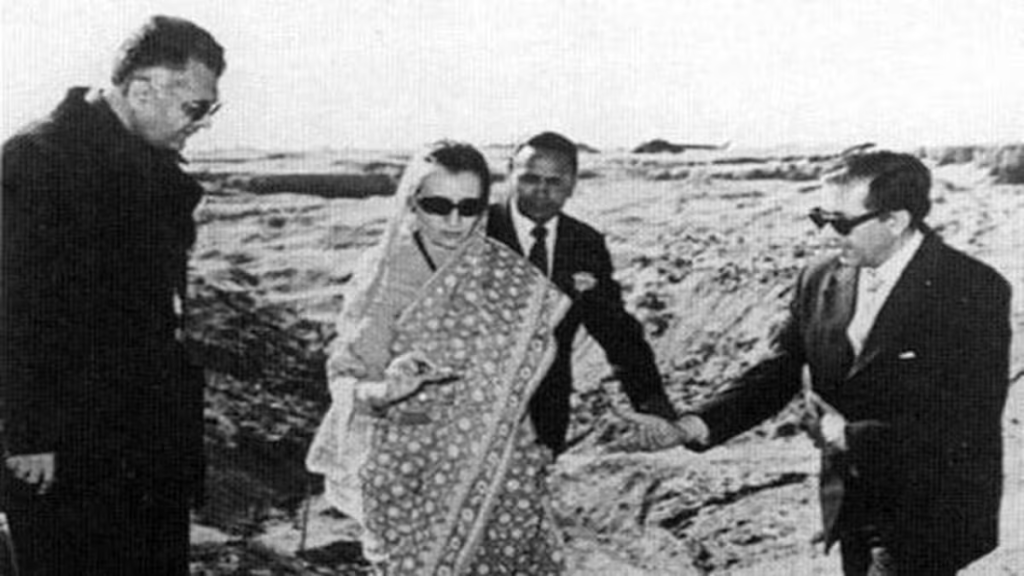
The test was codenamed “Smiling Buddha”. On the morning of 18 May, the device was detonated. India had conducted its first nuclear explosion. The government described it as a “peaceful nuclear explosion”, yet beyond India, the distinction grew far less comforting. A country that had never signed the Nuclear Non-Proliferation Treaty had just demonstrated to the world that it possessed the technological capability to detonate a nuclear device.
The consequences were swift.
The test triggered international resistance and restrictions, pushing India towards technological self-reliance and leaving its nuclear ambitions deliberately ambiguous for the next two decades.
For the next twenty-four years, the deserts of Pokhran would remain silent.
But then in May 1998, it came to life again.
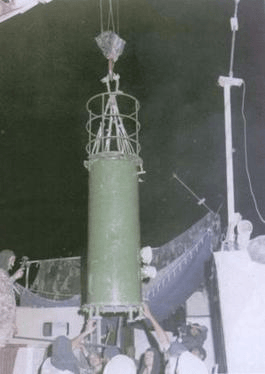
Under Prime Minister Atal Bihari Vajpayee, India conducted a series of five nuclear tests at Pokhran. This time, there was little ambiguity about what India was demonstrating: the country had openly declared itself a nuclear-armed state.
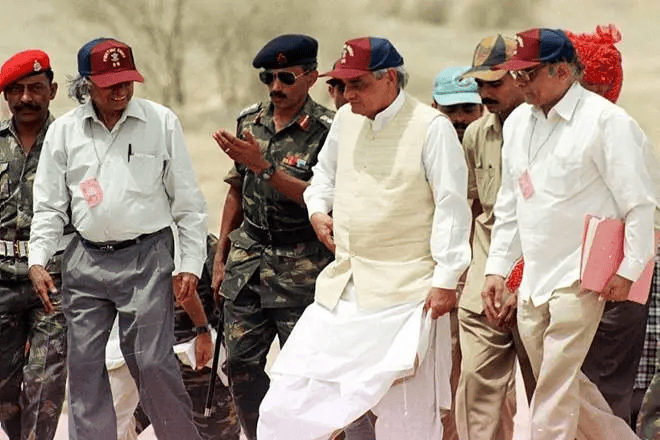
The world reacted with condemnation and sanctions. Pakistan followed with its own nuclear tests weeks later, transforming the military and strategic landscape of South Asia.
Pokhran II, however, wasn’t merely a second test. It was the culmination of a question that quietly followed India’s nuclear programme for decades: What would India do with the power it spent a half-century learning how to harness?
This step marked a decisive transformation in India’s nuclear story. The country was now asking how this capability would fit into its place in the world.
In the years that followed, the nation sought to establish a framework around its nuclear arsenal while simultaneously reopening the door for international civil nuclear cooperation. The 2008 India-US civil nuclear agreement helped end decades of isolation from international nuclear trade.
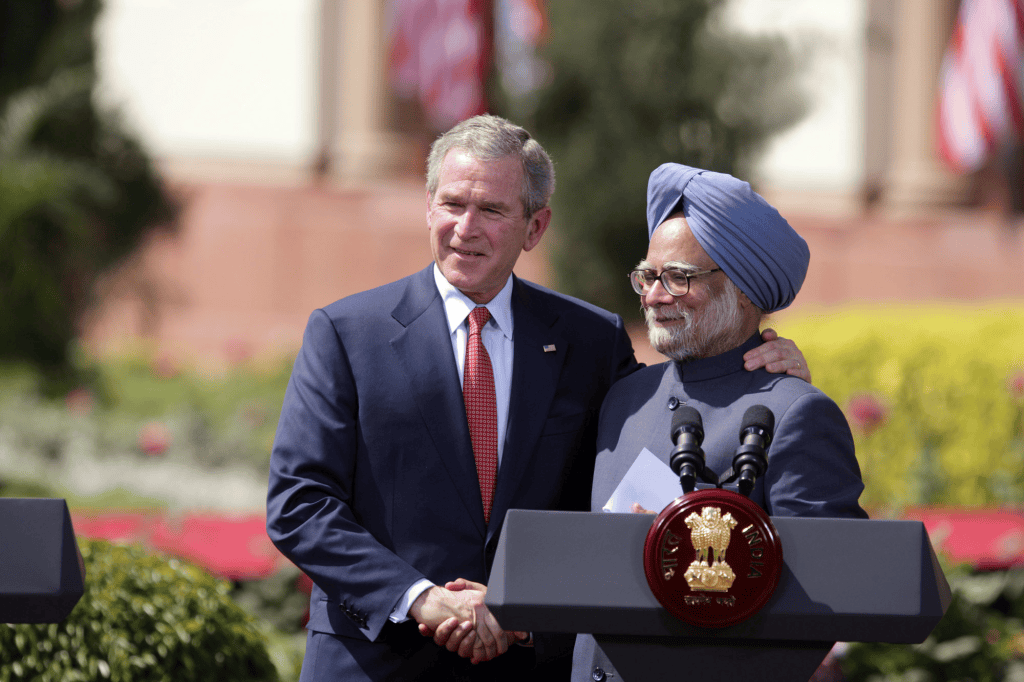
Yet beneath the diplomacy, the reactors and weapons, the original ambition remained remarkably familiar.
To master the atom on India’s own terms.
That ambition had begun with a letter, decades earlier – written by an Indian physicist in Bombay, inquiring whether India could build a scientific institution that could stand with the world’s greatest.
Eight decades later, that answer no longer remains confined to a laboratory. It lies in the country’s reactors, its scientific institutions, its energy programme, and its strategic capabilities.
Looking back, it’s impossible not to feel a sense of quiet admiration for the vision which would eventually draw the map for India’s scientific and strategic destiny. It’s a testament to human ingenuity, to the persistence of an idea long after its originator was gone, and to the enormous distance a single vision can travel.
The paper on Homi Bhabha’s desk in Bombay may have been small. The dream was anything but.
 THE VANTAGE
Leave a comment