A Voyage from J.R.D. Tata’s Pioneering Vision to One of Aviation’s Most Ambitious Turnarounds
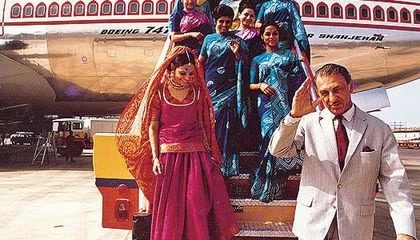
J.R.D. Tata in front of a Boeing 747 named ShahJehan
A warm October dawn hung over Drigh Road Aerodrome in Karachi. The air still carried a whisper of wind that held dust across the tarmac. On one end of that runway stood a small de Havilland Puss Moth. Its propellors burst open to life in a reluctant splatter before settling into rhythm, the engine’s vibrations quickly stealing the silence of the morning.
To those who did witness it, a small airliner carrying sacks of mail was nothing but unremarkable. But this quiet morning in Karachi would later become one of the opening chapters of one of modern aviation’s most iconic stories. It was here that Air India took its first breath, an airmail service to Bombay.
Behind the wheel was the one and only J.R.D. Tata.
This young industrialist was one of India’s earliest licensed pilots. Aviation fascinated him since childhood, and this flight was the product of that ambition.
Over the decades that followed, this modest airmail service evolved into one of the world’s most admired airlines. Beneath J.R.D. Tata’s stewardship, the airline became India’s flying ambassador. From its iconic Maharaja mascot to its reputation for incredible hospitality, Air India had earned its spot among the global elite. To many, it wasn’t just an airline, but a testament to a young nation finding its place in the world.
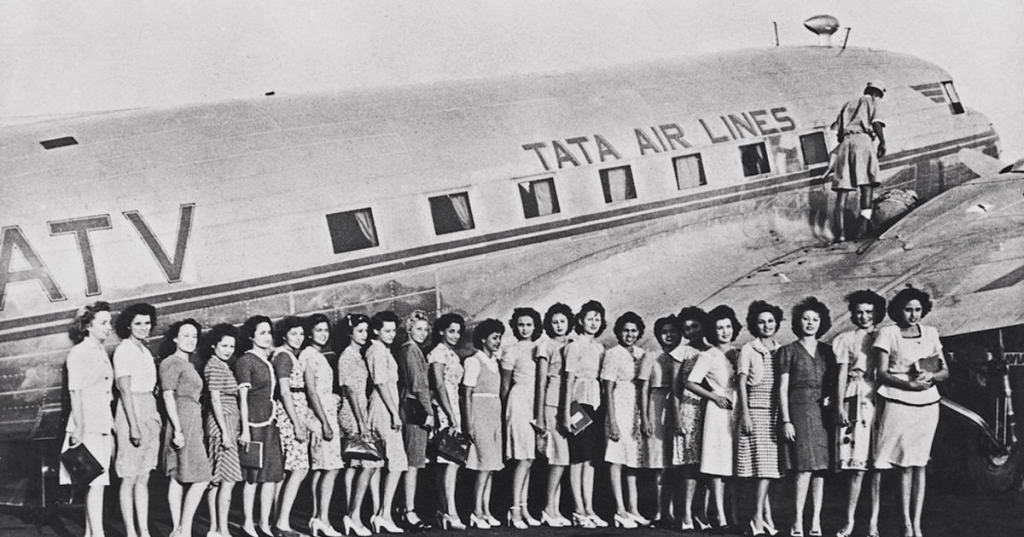
Vt-atv, a douglas dc-3 aircraft
But Air India’s exceptional reputation wasn’t born out of nowhere. It was the outcome of Tata’s immense belief in perfectionism, punctuality, and presentation. As he iconically remarked, “If you want excellence, you must aim at perfection”, that spirit set the vision for an airline that was truly world-class. The idea that every flight represented India turned a private endeavour into a symbol of patriotism.
The decades that followed echoed the commitment to showcase India to the world. For a long time, the status of a world-class airline remained comfortably in the pockets of Western carriers. But Air India broke that perception.
Meals arrived on fine crockery rather than plastic trays. The Maharaja appeared in witty advertisements around the world, adapting his personality to every destination he visited. Cabin crew became synonymous with warmth and elegance, while J.R.D. Tata himself was known to send handwritten notes after flights, commenting on everything from dusty windows to indifferent service. Excellence wasn’t an aspiration—it was an expectation.
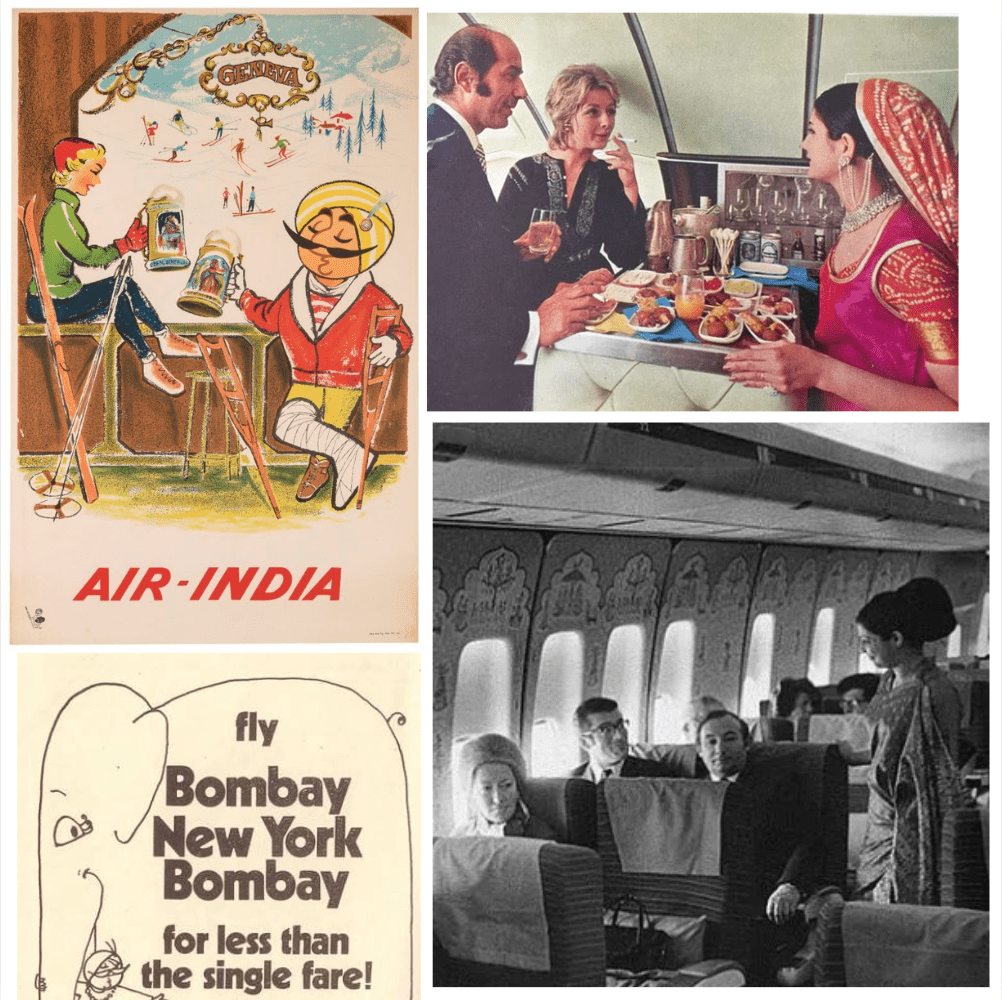
a glimpse into air india’s glory throughout the 60s and 70s
The Maharaja soared, conquered and painted the skies red. However, 1978 became a turning point. The visionary of the airline, J.R.D. Tata was removed as chairman.
Though Air India remained a respected airline for the years to come, the departure of its visionary leader laid the path for years of plunder, mismanagement, and decline. Slowly but steadily, the Maharaja began to frown.
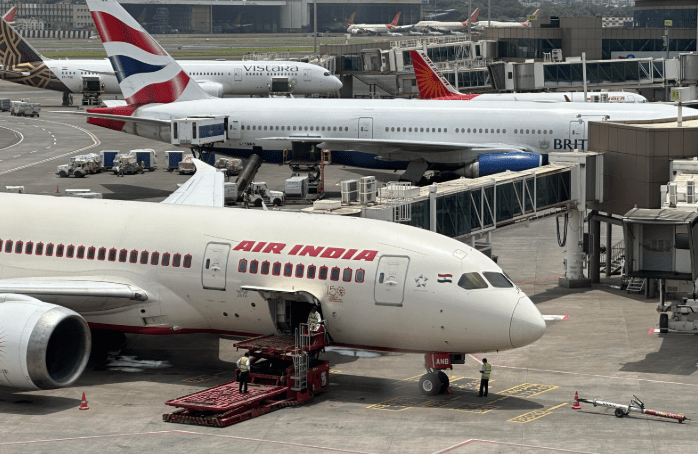
Nearly seven decades after losing the airline he had built, J.R.D. Tata’s creation found its way back home. The years that followed would require more than a fresh coat of paint and a new aircraft, but a complete transformation of the airline’s internal culture. The task ahead was never to erase the flag carrier of its identity, but to rediscover the qualities that once made it one of the world’s finest airlines.
And this turnaround was dramatic. Fresh liveries began appearing, ageing cabins were stripped down and rebuilt, celebrated designer Manish Malhotra reimagined its uniforms, menus were overhauled, and one of aviation’s largest aircraft orders signalled that Air India wasn’t merely looking to modernise, but to compete once again with the world’s best.
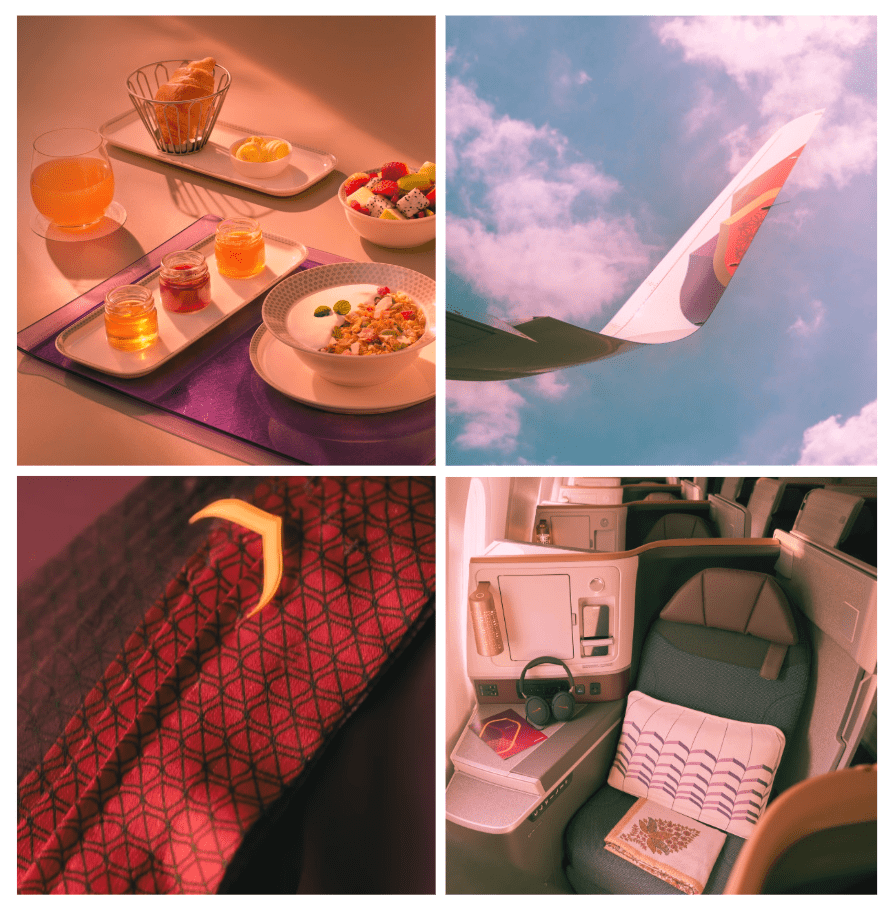
Credit: air india
An airline’s excellence is rarely decided by an aircraft alone; it often lives in the quiet details. The warmth of a welcome, the presentation of a meal, the fabric of a uniform, the comfort of a seat, and the confidence passengers place in the experience. It’s in these details that the Air Indian renaissance is perhaps the most evident.
2026 is set to be a year of rapid transformation for the airline, where a lot of Tata’s plans begin appearing visibly and substantially. However, that also means saying goodbye to an old part of Air India that many Indians consider nostalgic.
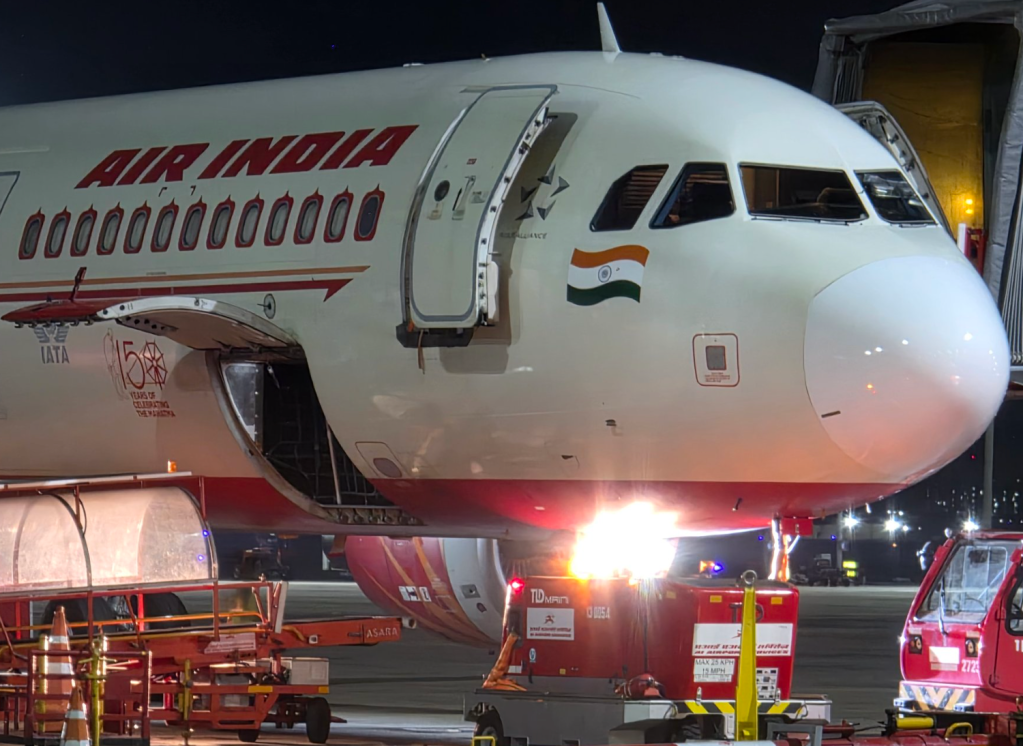
credit: vt-vlo
As we watch the horizons set for the iconic Konark Wheel on the Air India tails, a future of limitless possibilities awaits the airline. With transformation comes a quiet reminder of your past. It’s bittersweet as these classic liveries will soon fade into Indian aviation history.
 THE VANTAGE
Leave a comment